

Dhyana (mediation)
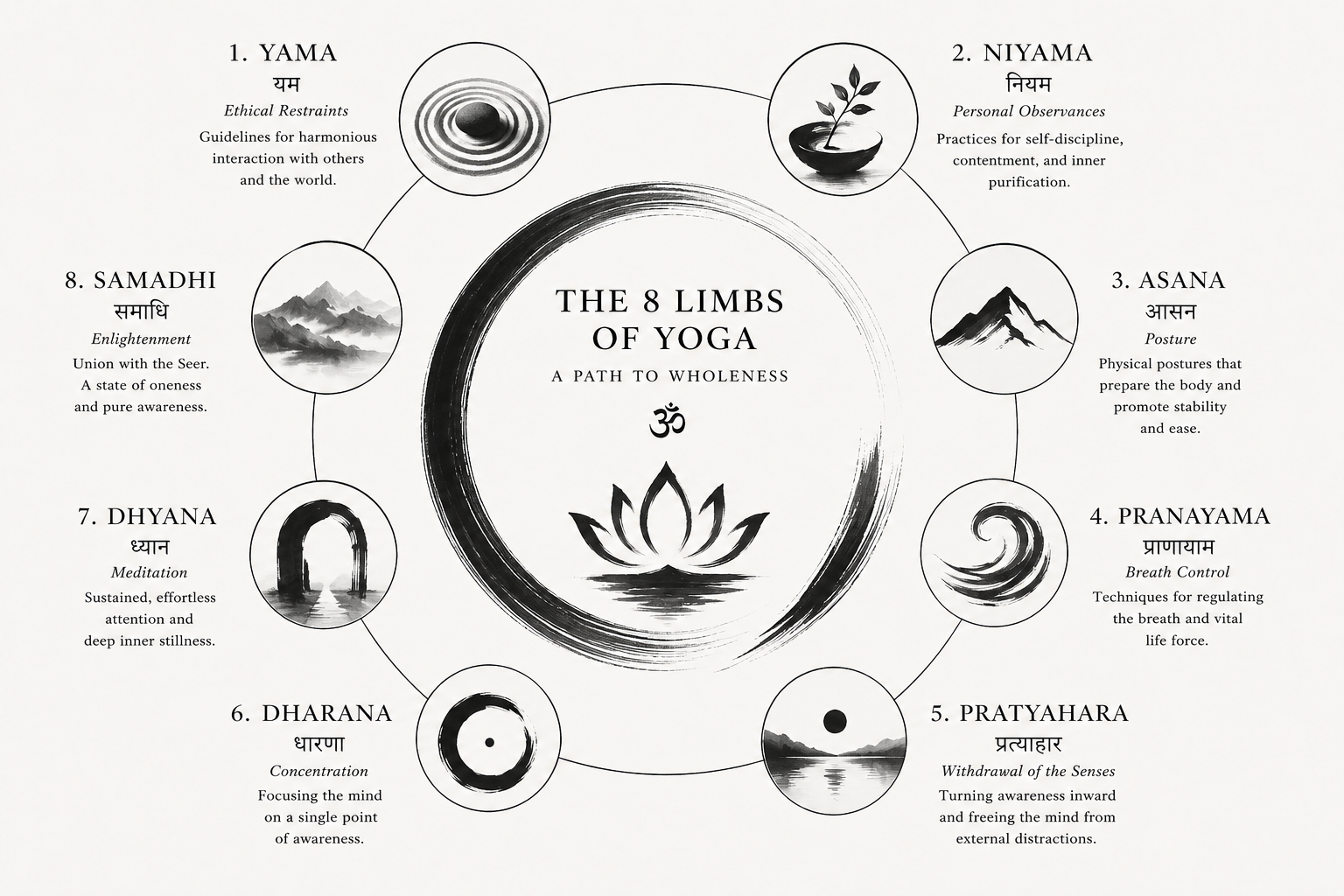
Dhyana teaches us how to observe. Not simply our thoughts. Not simply our emotions. But awareness itself.
Across cultures and throughout history, humans have asked remarkably similar questions:
Who am I?
What is consciousness?
What remains when thought becomes quiet?
Buddhists, Taoists, yogis, mystics, philosophers, neuroscientists, and physicists have all approached these questions from different directions. The language changes. The curiosity remains.
Modern life encourages constant engagement with the external world. Notifications. Responsibilities. Opinions. Stimulation. Information.
Dhyana invites us to turn our attention inward through breath control, withdrawl of the senses, and concentration. Not as an escape from reality, but as a way of encountering it more directly. As awareness deepens, many people begin to discover something surprising:
Thoughts are happening.
Emotions are happening.
Sensations are happening.
But they are not the entirety of who we are. There is also an awareness that notices them, a deep inner stillness.
Many contemplative traditions describe this realization differently. Witness consciousness. Buddha nature. Pure awareness. Presence. Spirit. The Self.
The names matter less than the experience itself.
Science is increasingly exploring these questions as well. Neuroscience investigates consciousness. Psychology studies perception and identity. Physics continues to challenge assumptions about observation, time, and reality itself.
The deeper we look, the more mystery remains. Dhyana does not provide certainty. It provides intimacy. An opportunity to meet experience directly.
To become curious about the mind rather than controlled by it.
To discover that awareness may be far larger than the thoughts passing through it.
Not because we transcend being human. But because we finally become present enough to inhabit it fully.